Showing posts with label nature. Show all posts

Sunday, 10 April 2016

This is Rare but not Impossible

A Wild Wolf and a Dog

Despite their incredible beauty and obvious similarities to our domestic companions, just about everyone knows that wolves are not to be messed with in any way.
But in 2003, Alaskan wildlife photographer Nick Jans and his labrador encountered a wolf in their backyard – and began a relationship that would defy logic and transform an entire community.
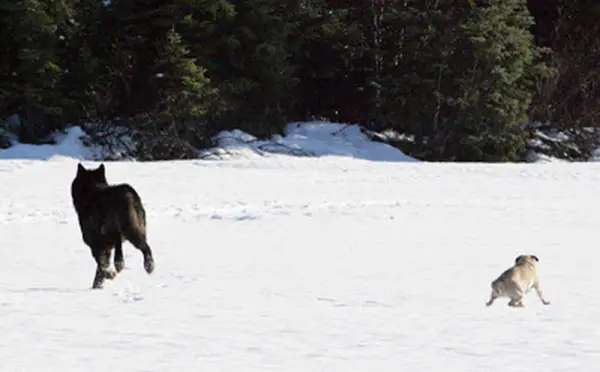
Jans was on the back porch of his Juneau home with his dog when a wild wolf appeared. With all the excitement, his dog slipped away, racing out to meet the stranger.
nick
Nick jans
Nick was stunned to see the two start to play together. He managed to capture this photo of them during the encounter.
encoun
Nick Jans
The wolf stayed in the area, and in the years since, Nick has devoted much of his time to documenting him, naming him Romeo.
romeo
Arnie Hanger
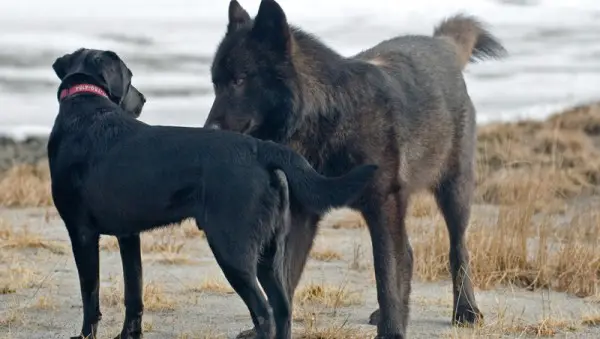
Romeo became a Juneau fixture, known for playing with local dogs at nearby Mendenhall Glacier Park.
romeno
Nick Jans
Residents were unsure at first, but they soon realized that Romeo just wanted to play.
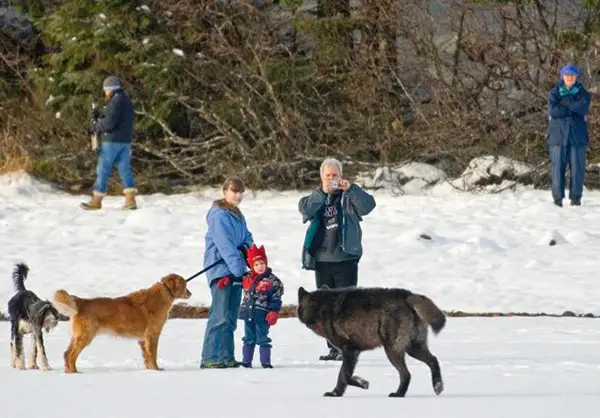
playy
Nick jans 
Romeo didn’t just play with other dogs. He played with humans, too. “The wolf would bring out toys that he’d stashed,” Nick said in an interview. “One was a Styrofoam float. Romeo would pick it up and bring it to [my friend] Harry to throw. He clearly understood the same sort of behaviors that we see in dogs.”
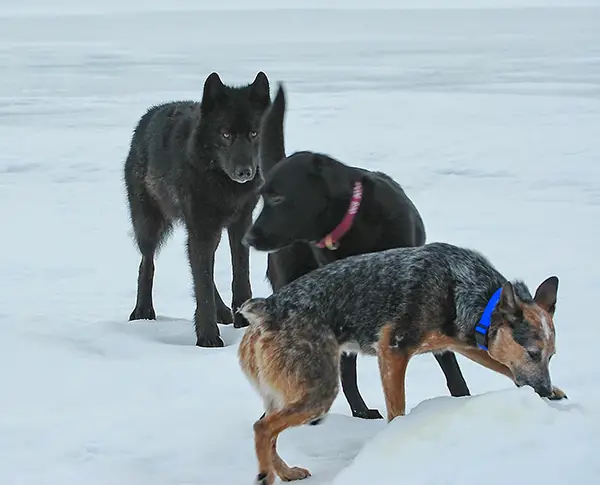
wolfff
Nick jans
“The amazing thing was Romeo’s understanding. It wasn’t just our understanding and tolerance. It was the combination of his and ours and the dogs’. We were these three species working out how to get along harmoniously. And we did.”
wo
Dave Wilson
Romeo remained around the outskirts of Juneau for six years, becoming an ambassador to the wild and a powerful symbol in the community.
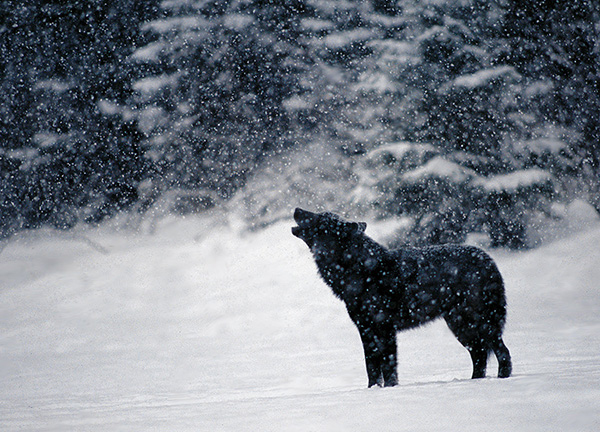
he
Nick Jans
After Romeo’s passing in 2010, the residents of Juneau held a memorial for the wolf and had this special plaque made in his honor.
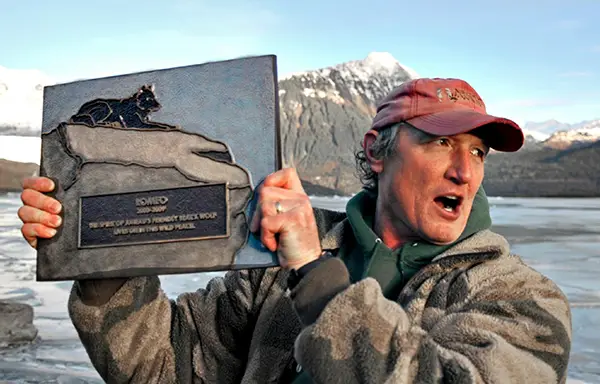
homorr
Klas Stolpe/Juneau Empire
It’s so inspiring to see three different species learn to live peacefully together in harmony. It just goes to show how wonderful the world can be.

Wednesday, 16 March 2016

Game Of Thrones Fans Unite: Baby Dragons Are Hatching In Slovenia

Baby Dragons will soon Hatch in Slovenia

Baby Dragons
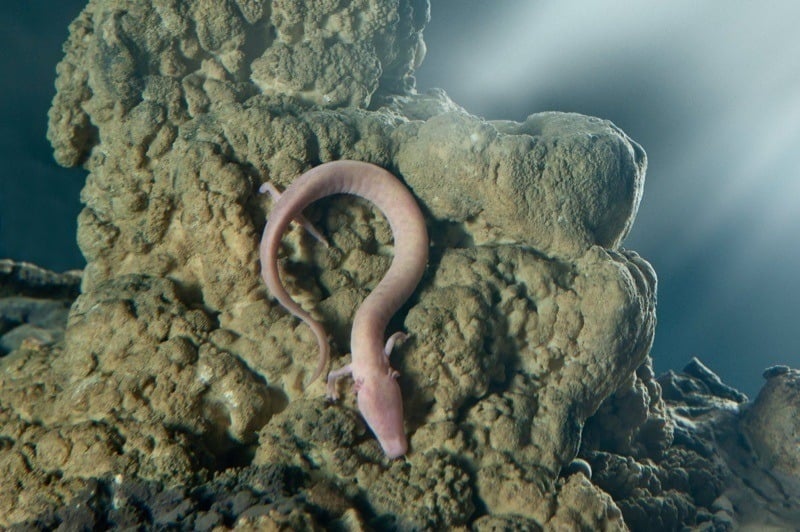
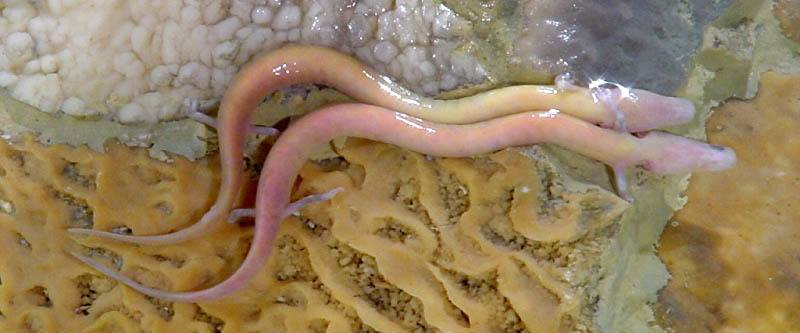
Olm cave salamanders, known as “baby dragons,” are found deep in the dark caves of Europe.
Game of Thrones fans eagerly awaiting season six now have something in the real world to get excited about: Slovenia’s “baby dragons.”
Biologists in Slovenia are preparing for a new brood of olms, cave salamanders known locally as “baby dragons,” to hatch deep in a minimalist aquarium in a dank European cave.
The olm is the continent’s only cave-adapted vertebrate, and only reproduces once every six or seven years. So, when a new brood of 57 eggs was laid in January, scientists and tourists alike crowded into the cave in the hopes of being the first to witness the newest batch of baby dragons.
Olm Salamander
A quick glance at an olm is all it takes to understand the myth and mystery surrounding these creatures. Olms have a thin, snake-like body, short and stubby legs, and frilly fan-like gills protruding from each side of the head. It’s blind (baby olm’s eyes atrophy after about four months) so it hunts worms, insects, and snails using only its senses of hearing and smell. In addition to their keen ears and noses, olms have evolved to detect electric and magnetic fields.
It’s no wonder 15th century humans once believed that the olm was the offspring of dragons.


“People had never seen it and didn’t know what it was,” biologist Saso Weldt told the Christian Science Monitor. “During the winter time, clouds of fog often rose from the cave, so they came up with stories of a dragon breathing fire from the cave, and they thought the olms were its babies.”
Sure, the species can’t breathe fire and they only grow to about 10 inches long, but they can live for 100 years and survive 10-year spans without food. But rubbernecking birthers shouldn’t get too excited about seeing new hatchlings anytime soon — it could take another four months before new babies emerge. There’s also the possibility that the eggs won’t survive long enough to hatch. The last known time an olm laid eggs, the mother’s cannibalistic tendencies cut her hatchlings’ lives short.
This time, however, the waiting biologists are prepared and ready to see these “baby dragons” grow to adulthood.

Sunday, 6 March 2016

Blue Fire Crater by Reuben Wu

Rivers of Molten Sulphur Flowing Inside an Indonesian Volcano Photographed by Reuben Wu

wu-3
While on a trip to visit the Ijen and Bromo Tengger Semeru volcanoes in East Java last month, Chicago-based photographer Reuben Wu captured the unusual sight of molten sulphur that flows from fumaroles at the base of the Blue Fire Crater at Ijen. The area is usually swarming with tourists, but Wu stayed after sunset until the moon rose to capture these otherworldly images.
The journey into the Ijen Caldera is not for the faint hearted. A two-hour trek up the side of the rocky volcano is followed by another 45-minute hike down to the bank of the crater. The blue fire found at the base is the result of ignited sulphuric gas that burns up to 600 degrees Celsius (1,112 degrees Fahrenheit) and can flare up to 5 meters (16 feet) into the air. It is the largest “blue flame” area on Earth.
Additional photos from Wu’s trek through Indonesia can be seen here
wu-1
wu-2
wu-4
wu-5
wu-6
wu-7
wu-8

Friday, 11 December 2015

White Arctic and Antarctic Photography

White Arctic and Antarctic Photography by Kyriakos Kaziras

Photographer Kyriakos kaziras, of Greek and French nationality captured some pictures of both the poles.He photographed polar bears from north pole and penguins from south pole.These whitish pictures which are very high contrasted not only mesmerizes but also showcases nature's art.

Wednesday, 9 December 2015

1,400-Year-Old Chinese Ginkgo Tree Drops Leaves That Drown Buddhist Temple In A Yellow Ocean

A Buddhist Temple Drowned in a Yellow Ocean

A 1,400-year-old ginkgo tree in China has recently drawn thousands of people from all over the country. Golden leaves have been falling on the ground since mid-November, turning the temple’s ground into a yellow ocean. The ancient tree grows next to the Gu Guanyin Buddhist Temple in the Zhongnan Mountains and is a perfect celebration of autumn.

The ginkgo tree, also known as the maidenhair, is sometimes referred to as a “living fossil” because, despite all the drastic climate changes, it has remained unchanged for more than 200 million years. It is a living link to the times when the dinosaurs ruled the earth.


Thursday, 12 November 2015

Never-Before-Seen Images Reveal How The Fukushima Exclusion Zone Was Swallowed By Nature

Never-Before-Seen Images Reveal How The Fukushima Exclusion Zone Was Swallowed By Nature

Polish photographer Arkadiusz Podniesinski travelled to the site of the Fukushima nuclear disaster last month to see the location with his own eyes. When he obtained permits to enter the roughly 20km (12.5 mile) Exclusion Zone, he was confronted with a scene similar to one from a post apocalyptic film. Podniesinski previously photographed the area around the 1986 Chernobyl nuclear disaster.

“It is not earthquakes or tsunami that are to blame for the disaster at the Fukushima Daiichi nuclear power station, but humans,” writes Podniesinski on his website. He undertook the project so that he could draw his “own conclusions without being influenced by any media sensation, government propaganda, or nuclear lobbyists who are trying to play down the effects of the disaster, and pass on the information obtained to as wider a public as possible.”

Abandoned vehicles are slowly swallowed up by nature on a stretch of road near the power plant


Some of the cars have entirely disappeared in the wild grass


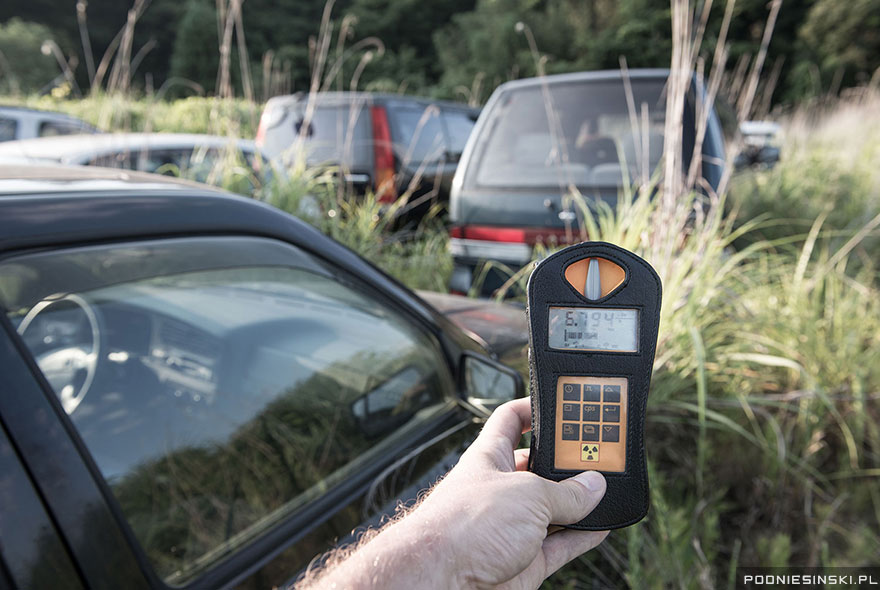
Podniesinski shows a radiation reading of 6.7 uSv/h


A chained-up motorcycle is slowly absorbed into the field


These contaminated televisions were collected and piled up as part of the cleaning efforts


Cobwebs hang above the scattered products in this abandoned supermarket


Another photo from within a supermarket feels eerily similar to those from post-apocalyptic movies


This abandoned computer lab covered in animal droppings is from a village near the plant


A dining table with portable cookers ready to prepare food looks like it was left in haste


These go-karts have had their last race in an entertainment park located within the 12.5mile exclusion zone